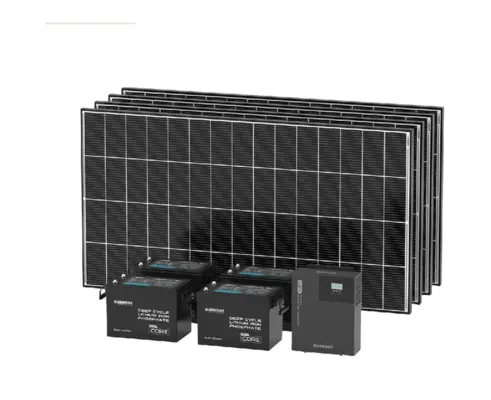
Best Solar Kits for Whole-Home Backup
A whole-home solar backup system keeps your entire house running when the grid goes down — lights, refrigerator, well pump, internet, HVAC, and everything else. These are not the portable power stations you take camping. These are permanently installed systems with enough panel capacity, battery storage, and inverter power to replace grid electricity for hours or days at a time.
In the post-tax-credit era, whole-home solar backup is a significant investment. But for homeowners in areas with frequent outages, time-of-use rate structures, or a genuine desire for energy independence, it remains one of the best long-term investments you can make. Every system listed here uses real, verified components.
What a Whole-Home System Requires
A typical U.S. home consumes 30–40 kWh per day. To cover this with solar, you need approximately 8–12 kW of panel capacity, a hybrid inverter rated for 6,000W+ continuous (with split-phase 120/240V output for major appliances), and 15–30 kWh of battery storage for overnight coverage and cloudy-day autonomy.
EG4 Complete Home System: 6000XP + LL-S Batteries
$$$$The DIY community's go-to whole-home setup — EG4 hybrid inverter paired with EG4 rack-mount batteries.
- EG4 6000XP hybrid inverter: 6,000W continuous, 12,000W surge, dual MPPT inputs
- Pair with 3–6 EG4 LL-S 48V 100Ah batteries (15–30 kWh of storage)
- Split-phase 120/240V output — runs well pumps, dryers, HVAC
- CAN-bus communication between inverter and batteries for precise SoC management
- Touch-screen display with WiFi monitoring
- Total system cost (inverter + 20 kWh batteries + panels + racking): approximately $12,000–$18,000 DIY
- No federal tax credit in 2026 — but DIY labor savings offset most of the lost incentive
Sol-Ark 15K + LiFePO4 Battery Bank
$$$$$The premium residential hybrid inverter for large homes — 15,000W continuous with grid-tie and off-grid capability.
- 15,000W continuous output — handles entire house including HVAC
- Dual MPPT inputs handling up to 16,000W of solar
- Works in grid-tied, off-grid, and hybrid modes
- Compatible with most 48V LiFePO4 battery brands (EG4, Fortress, SOK)
- Integrated rapid shutdown compliance (NEC 2020+)
- Premium price: inverter alone runs $4,000–$6,000
- Best choice for homes with 10+ kW solar arrays and 20+ kWh battery banks
Growatt SPF 6000ES + LiFePO4 Bank
$$$The value-oriented whole-home hybrid — 6,000W with built-in 80A MPPT at a lower price point.
- 6,000W continuous, 10,000W surge
- Built-in 80A MPPT solar charge controller
- 48V battery input — pairs with EG4, SOK, or LiTime batteries
- 120/240V split-phase output available (SPF 6000ES-H model)
- WiFi monitoring via ShinePhone app
- Lower cost than Sol-Ark or EG4 6000XP at similar output specs
- Large and growing user community with DIY installation resources
Critical 2026 Note: The 30% federal residential solar tax credit expired December 31, 2025. Whole-home systems purchased with cash or a loan in 2026 receive zero federal credit. A $20,000 system that would have received a $6,000 credit now costs the full $20,000. Solar leases and PPAs still access the commercial 48E credit through 2027, but you do not own the system. For a full analysis of post-credit economics, see our Is Solar Worth It in 2026 guide.
Sizing Your Whole-Home System
Start with your electric bill. Find your average monthly kWh consumption and divide by 30 to get daily consumption. A 900 kWh/month home uses 30 kWh/day. To generate 30 kWh/day in a location with 5 peak sun hours, you need 6 kW of panels (30 ÷ 5 = 6). Add 20% for system losses: 7.2 kW minimum panel array.
For battery sizing, decide your autonomy target. One night of backup (covering the 12–16 hours of no solar production) requires roughly 15–20 kWh for most homes. Two days of full autonomy (for extended outages or cloudy stretches) requires 30–40 kWh. Most homeowners find 15–20 kWh provides adequate overnight backup with next-day solar recharging.
For component-level guidance, see our DIY battery bank guide and best inverters roundup.
Essential vs Non-Essential Loads
Whole-home backup does not mean you need to power everything in your house at once during an outage. Designing your system around essential loads dramatically reduces the required battery bank size and cost.
Essential loads include your refrigerator and freezer (preserving food), lighting in key rooms, internet and communication equipment, well pump or water system, medical devices (CPAP, oxygen, etc.), and one or two outlets for charging devices. These typically total 3,000–5,000W peak and 10–15 kWh daily.
Non-essential loads include electric dryer, electric water heater, electric oven/range, central AC (in mild weather), pool pump, and EV charging. Cutting these during outages reduces your battery and inverter requirements by 30–50%, saving thousands of dollars in system cost.
Many hybrid inverters support a split-panel configuration where essential loads are wired to a backup subpanel that receives battery power during outages, while the rest of the house drops off. This is the most cost-effective approach for homeowners who want reliable backup for critical systems without the expense of powering every circuit in the house.
Grid-Tied vs Off-Grid vs Hybrid
A grid-tied system exports excess solar to the utility and draws from the grid at night. It has no battery and provides no backup power during outages — when the grid goes down, your panels shut off (anti-islanding protection). This is the cheapest solar installation but provides zero resilience.
An off-grid system is completely independent of the utility grid. All power comes from solar panels and is stored in batteries. This provides total energy independence but requires careful sizing to handle multi-day cloudy stretches and seasonal production variations. It is most common for rural properties without grid access.
A hybrid system connects to the grid but includes battery storage and a hybrid inverter with automatic transfer switching. During normal operation, it prioritizes solar self-consumption and battery storage. During outages, it seamlessly switches to battery power and continues to charge from solar panels. This is the most versatile and popular configuration for homeowners who want the economic benefits of grid connection with the resilience of battery backup.
Permitting and Interconnection
Whole-home systems that connect to the utility grid require interconnection approval from your utility company. This process varies by utility but typically involves submitting a one-line electrical diagram, equipment specifications, and proof of code-compliant installation. Off-grid systems on rural properties may require no permits at all, but verify with your local Authority Having Jurisdiction before assuming.
Electrical permits are required in most jurisdictions for systems over a certain wattage threshold. The permit process typically includes plan review, a rough-in inspection (before the system is energized), and a final inspection (after energization). Some utilities also require a separate net metering agreement before they will approve grid interconnection.
Frequently Asked Questions
How much does a whole-home solar backup system cost in 2026?
A DIY whole-home system (8–12 kW panels, 6,000W+ hybrid inverter, 15–20 kWh LiFePO4 battery bank, racking, and wiring) costs approximately $12,000–$25,000 depending on component choices. Professionally installed systems run $25,000–$50,000+. No federal tax credit is available for homeowner-owned systems in 2026.
Can solar power my whole house during an outage?
Yes, with a properly sized system. You need a hybrid inverter with split-phase 120/240V output, sufficient battery storage (15–20 kWh minimum for overnight backup), and a panel array sized to recharge the battery bank during daylight hours. Systems with 6,000W+ continuous inverter output can run most household loads including refrigerator, lighting, internet, and moderate HVAC.
What inverter do I need for whole-home solar backup?
A hybrid inverter with split-phase 120/240V output, at least 6,000W continuous rating, and compatibility with LiFePO4 batteries. The EG4 6000XP, Sol-Ark 15K, and Growatt SPF 6000ES are the most popular options for DIY whole-home builds in 2026.
Generator Integration
Even well-designed whole-home solar systems benefit from a backup generator for extended cloudy periods. Most hybrid inverters include an automatic generator start (AGS) function that fires up a generator when battery state of charge drops below a configurable threshold and shuts it down when the batteries are recharged. This creates a fully autonomous system that can run indefinitely without human intervention.
A 5,000–8,000W propane or dual-fuel generator is the standard complement to a solar-battery system. Propane stores indefinitely (unlike gasoline, which degrades within months), starts reliably in cold weather, and produces cleaner exhaust than gasoline. Connect the generator to the hybrid inverter's AC input — the inverter manages charging the battery bank and powering loads simultaneously. Budget $800–$2,000 for a quality generator with electric start and AGS compatibility.
For systems designed from scratch, the combination of a properly sized solar array, a 48V LiFePO4 battery bank, a hybrid inverter with AGS, and a propane generator creates what experienced off-grid builders call a "four-season system" — one that handles every weather pattern and load scenario without manual intervention. The upfront cost is higher than grid-tied solar alone, but the resulting energy independence is complete and permanent.
Affiliate Disclosure: SolarPanelKits.co is a participant in the Amazon Services LLC Associates Program and eBay Partner Network. We earn commissions from qualifying purchases at no extra cost to you. All recommendations are based on genuine research — we never fabricate reviews or ratings.