Is Solar Worth It in 2026 Without the Federal Tax Credit?
The 30% federal residential solar tax credit is gone. The One Big Beautiful Bill Act, signed into law on July 4, 2025, terminated Section 25D of the Internal Revenue Code for any solar system placed in service on or after January 1, 2026. There is no phase-down, no partial credit, and no transition period. If you install solar on your home in 2026 and own the system outright, you receive zero federal tax benefit.
This is the single biggest change to residential solar economics since the credit was introduced in 2005. Most competing solar content on the internet still assumes a 30% credit in their payback calculations — making those articles worse than useless for anyone making a purchase decision in 2026. This guide starts from the real 2026 baseline: no federal credit, current panel and battery prices, and the actual incentives that still exist.
Important Distinction: The commercial Investment Tax Credit (Section 48E) was not repealed. Solar leases and Power Purchase Agreements (PPAs) — where a third-party company owns the panels on your roof — can still access this credit through 2027. The homeowner does not claim the credit directly; instead, the leasing company claims it and passes savings through as lower monthly payments. If you are considering a lease or PPA, the federal incentive landscape is different from cash/loan purchases.
What Actually Changed on January 1, 2026
Under the Inflation Reduction Act (IRA), the residential solar tax credit was set to remain at 30% through 2032, then step down to 26% in 2033, 22% in 2034, and expire in 2035. The One Big Beautiful Bill Act eliminated that entire schedule, cutting the credit to zero roughly seven years ahead of plan.
The credit applied to the total cost of a solar installation — panels, inverters, batteries, racking, wiring, and labor. On a typical $25,000 residential solar system, that was a $7,500 reduction in federal tax liability. On a $40,000 system with battery storage, it was $12,000. Those savings are now gone for homeowner-owned systems.
Homeowners who completed installation by December 31, 2025 can still claim the credit on their 2025 tax returns. The credit is nonrefundable (it reduces taxes owed but cannot generate a refund), and unused portions can be carried forward to future tax years. If you installed solar in 2025, file IRS Form 5695 — you are still eligible.
The Economics Without the Credit
Removing the 30% credit adds approximately $5,000–$12,000 to the effective cost of a residential solar system, depending on system size. That changes the payback period — but it does not make solar a bad investment. Here is why.
Utility rates keep rising. The U.S. average residential electricity rate has increased steadily, with many states seeing 3–6% annual increases. In states like California, Connecticut, Massachusetts, and Hawaii, rates exceed 25 cents per kWh and continue climbing. A 7 kW solar system in California producing 10,000 kWh per year at $0.30/kWh saves $3,000 annually — that payback period lands between 7–10 years even without any incentives, and the system produces power for 25+ years.
Panel prices have dropped dramatically. Solar panel costs have fallen roughly 90% over the past decade. In 2026, a quality 400W monocrystalline panel costs $150–$250 retail. A complete DIY ground-mount or roof-mount system can be built for $1.50–$2.50 per watt before labor — far less than the $3.50–$5.00 per watt that professional installers charge. The DIY route recovers the lost tax credit through labor savings alone.
Battery storage adds resilience value. The value of solar is no longer just about electricity cost savings — it is about energy independence and backup power. Grid outages are becoming more frequent due to extreme weather events, aging infrastructure, and increased demand. A solar-plus-battery system provides automatic backup power regardless of grid status. That resilience has real economic value, even if it is harder to quantify than a simple payback calculation.
State Incentives That Still Exist
The federal credit is gone, but state and local incentives remain active — and in some states, they are substantial enough to close most of the gap.
| State | Incentive | Value |
|---|---|---|
| New York | State tax credit | 25% of system cost, up to $5,000 |
| South Carolina | State tax credit | 25% of system cost, no cap |
| Massachusetts | SMART program + SRECs | Performance-based payments + tradeable credits |
| Oregon | Residential Energy Tax Credit | $2,500 credit |
| New Jersey | SRECs (Solar Renewable Energy Certificates) | Tradeable certificates worth $80–$200+ each |
| Maryland | Clean Energy Grant | Up to $1,000 grant |
| Illinois | Adjustable Block Program | Upfront payment based on system size |
| Many states | Net metering | Credit for excess solar sent to grid at retail rate |
| Many states | Property tax exemption | Solar does not increase property tax assessment |
| Many states | Sales tax exemption | No sales tax on solar equipment purchases |
Net metering remains the most broadly impactful state-level incentive. In states with full retail-rate net metering, every kilowatt-hour your system exports to the grid during the day earns a credit that offsets kilowatt-hours you consume at night. This effectively makes the grid your battery — at zero hardware cost. However, net metering policies vary widely by state and utility, and several states have reduced or restructured their programs in recent years. Verify your specific utility's current net metering policy before assuming full retail credit.
Action Item: Check the DSIRE database (Database of State Incentives for Renewables and Efficiency) at dsireusa.org for current incentives in your state. Programs change frequently — what was available six months ago may have been modified or expanded.
When Solar Makes Financial Sense Without the Credit
Solar is most compelling in 2026 for homeowners in three situations.
High electricity rates: If you pay more than $0.15/kWh, solar payback periods remain under 12 years even without incentives. Above $0.25/kWh, payback drops to 6–8 years. In the highest-rate markets (California, Connecticut, Hawaii, Massachusetts), solar pays for itself in 5–7 years and then produces free electricity for the remaining 18–20 years of the system's life.
Good state incentives: A New York homeowner with the 25% state credit ($5,000 max), net metering, and a property tax exemption recovers a significant portion of the lost federal credit through state programs alone.
DIY installation: Professional solar installation labor accounts for roughly 30–50% of total system cost. A DIY installer buying panels, racking, and an inverter directly saves $5,000–$15,000 on a typical residential system — fully offsetting the lost federal credit. This requires electrical competency and a willingness to navigate the permitting process, but the financial math is compelling.
When Solar Does Not Make Sense in 2026
Honesty matters. Solar is not the right investment for every homeowner in the post-credit era.
Very low electricity rates: If you pay less than $0.08/kWh (common in some parts of the Pacific Northwest, Tennessee Valley Authority service area, and other hydro/nuclear-dominant regions), solar payback periods stretch beyond 15 years. The math does not work without either strong state incentives or an energy independence motivation that goes beyond pure economics.
Heavy shading: If your roof or property receives fewer than 4 peak sun hours per day due to tree cover, neighboring buildings, or orientation, solar production drops below the threshold where economics make sense. Consider a ground-mount system if you have unshaded acreage, or explore community solar programs as an alternative.
Planning to move soon: Solar increases property value, but the premium does not always equal the installation cost — especially in markets where buyers are unfamiliar with solar or where net metering policies are weak. If you plan to sell within three years, the payback math is unlikely to work unless your state has exceptionally strong incentive programs.
The Lease and PPA Alternative
For homeowners who want solar but cannot or do not want to pay for a system outright, third-party ownership through a solar lease or Power Purchase Agreement (PPA) remains a viable path. The key difference: the leasing company owns the panels on your roof and claims the Section 48E commercial tax credit. You pay a monthly lease payment or a per-kilowatt-hour rate that is typically lower than your utility rate.
The 48E credit for commercial solar projects is still available through December 31, 2027, with extended timelines for projects that begin construction by July 4, 2026. This means leasing companies can continue to offer competitive pricing through at least 2027.
The trade-off: you do not own the system, you build no equity in the equipment, and the lease typically runs 20–25 years. If you sell your home, the lease transfers to the buyer (which can complicate the sale). For homeowners who prioritize lower monthly electricity costs without upfront investment, a PPA can be the right choice — but read every line of the agreement, especially escalation clauses that increase your rate annually.
The Bottom Line
Losing the 30% federal tax credit is a real hit — there is no sugarcoating it. But solar remains a strong long-term investment for most homeowners in most of the country. Rising utility rates, falling equipment costs, active state incentive programs, and the increasing value of energy independence all contribute to payback periods that remain reasonable for the majority of U.S. homeowners.
The homeowners who benefit most in the post-credit era are those willing to DIY their installation (recovering the credit loss through labor savings), those in high-rate electricity markets (where the baseline savings are largest), and those in states with strong remaining incentive programs. For everyone else, a solar lease or PPA keeps the door open to solar savings without the upfront cost burden.
DIY vs Professional Installation: The 2026 Math
The economics of DIY solar installation have never been more compelling than in the post-credit era. With no federal tax credit to reduce the cost of professional installation, the labor savings from doing it yourself become the primary mechanism for keeping solar affordable.
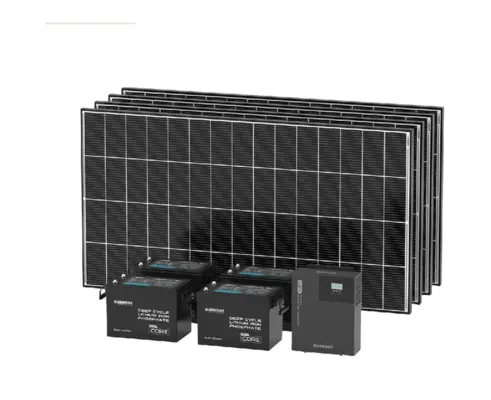
A professionally installed 7 kW residential system costs approximately $17,500–$25,000 (at $2.50–$3.50 per watt) in most markets. The same system built with retail-purchased components costs approximately $7,000–$12,000 in hardware: panels ($1,050–$1,750 for 7 kW of quality monocrystalline), a hybrid inverter ($1,500–$3,000), racking and mounting hardware ($800–$1,500), wiring, conduit, and electrical components ($500–$1,000), and a battery bank ($3,000–$5,000 for 10 kWh of LiFePO4).
That puts DIY savings at $6,000–$15,000 — which more than replaces the lost $5,250–$7,500 federal tax credit. The trade-off is your time, your willingness to learn electrical basics, and navigating the permit and inspection process in your jurisdiction.
Permitting Reality: Most jurisdictions require an electrical permit for grid-tied solar installations and may require a separate building permit for roof-mounted systems. The permit application typically requires a site plan, single-line electrical diagram, and equipment specification sheets. Many solar equipment retailers provide pre-made permit packages for their hardware. Off-grid systems on rural properties often require no permits at all, but verify with your local AHJ before assuming.
The Long-Term Payback Calculation
Solar payback math is straightforward once you strip out the marketing hype. Take your total system cost after applicable state incentives. Divide by your annual electricity savings (your solar production in kWh multiplied by your utility rate per kWh). The result is your simple payback period in years.
For a $15,000 system (after a $3,000 state incentive) producing 9,000 kWh per year at $0.20/kWh, annual savings are $1,800. Payback: 6.7 years. After payback, the system produces free electricity for the remaining 18–23 years of its warrantied life. At 3% annual utility rate increases, cumulative savings over 25 years exceed $60,000.
The payback period lengthens in low-rate markets and shortens dramatically in high-rate markets. A homeowner in Connecticut paying $0.30/kWh sees payback in 4–5 years. A homeowner in Louisiana paying $0.10/kWh may wait 15+ years. The geography of your electricity rate is now the single most important variable in the solar purchase decision.
Battery Storage: The New Value Proposition
In the pre-2026 world, the federal tax credit applied to battery storage alongside solar panels — making home batteries a subsidized purchase. Without the credit, standalone home batteries like the Tesla Powerwall or Enphase IQ Battery carry their full retail cost. However, the value proposition for batteries has actually strengthened in 2026 for two reasons.
First, grid reliability concerns have escalated. Extreme weather events, aging infrastructure, and the electrification of heating and transportation are straining grid capacity. The economic value of keeping your refrigerator, internet, and critical medical devices running during a multi-day outage is difficult to quantify but very real to the homeowners who experience it. Second, time-of-use (TOU) rate structures — which charge more during evening peak hours and less during midday — are expanding in many states. A battery charged by solar during cheap midday hours and discharged during expensive evening hours captures the rate differential as savings, even without net metering.
For DIY builders, LiFePO4 battery banks offer dramatically lower per-kWh costs than pre-built home battery systems. A 10 kWh DIY battery bank costs $1,200–$1,500 in LiFePO4 batteries alone (at $90–$120/kWh), versus $8,000–$12,000 for a comparable pre-built residential battery system. The labor and integration complexity is higher, but the savings are substantial.
For help sizing your system, see our system sizing guide. For a breakdown of every component you need, start with our solar components overview. To understand the full cost picture, read our guide on hidden costs solar kits don't include.
Frequently Asked Questions
Is there any federal solar tax credit for homeowners in 2026?
No. The residential clean energy credit (Section 25D) was terminated as of December 31, 2025 by the One Big Beautiful Bill Act. Homeowners who purchase solar systems with cash or a loan in 2026 receive zero federal tax credit. Solar leases and PPAs can still benefit from the commercial Section 48E credit through 2027, but the homeowner does not claim that credit directly.
Is solar still worth it without the 30% tax credit?
For most homeowners, yes. Rising utility rates, dramatically lower panel costs, active state incentive programs, and energy independence value keep solar payback periods between 6–12 years in most markets. In high-rate states like California, Connecticut, and Massachusetts, payback can be under 7 years without any federal incentive.
What state solar incentives are available in 2026?
State incentives vary widely. New York offers a 25% state tax credit (up to $5,000), South Carolina offers 25% with no cap, Massachusetts has the SMART program plus SRECs, and Oregon provides a $2,500 credit. Net metering, property tax exemptions, and sales tax exemptions on solar equipment are available in many states. Check the DSIRE database at dsireusa.org for current programs in your state.
Can I still get solar through a lease or PPA in 2026?
Yes. Solar leases and PPAs qualify for the Section 48E commercial investment tax credit because the third-party company owns the system. This credit is available through December 31, 2027. The leasing company claims the credit and passes savings to you through lower monthly payments or reduced per-kilowatt-hour rates.
Is DIY solar installation a good option in 2026?
DIY installation saves 30–50% of total system cost by eliminating professional labor charges. For a typical residential system, that is $5,000–$15,000 in savings — enough to fully offset the lost federal tax credit. DIY requires electrical competency, navigating the permitting process, and compliance with NEC code requirements. For capable homeowners, it is the most financially compelling path to solar in the post-credit era.
Affiliate Disclosure: SolarPanelKits.co is a participant in the Amazon Services LLC Associates Program and eBay Partner Network. We earn commissions from qualifying purchases at no extra cost to you. All recommendations are based on genuine research — we never fabricate reviews or ratings.