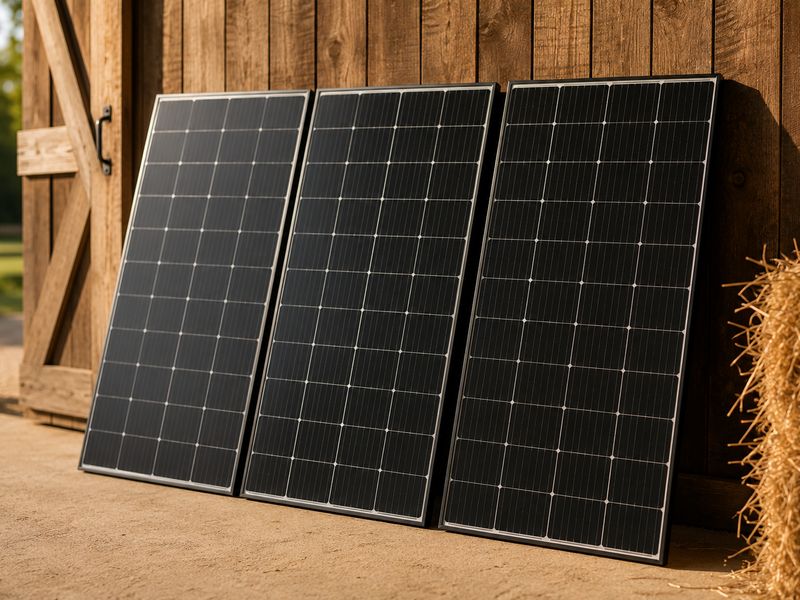
All-in-one packages designed to get you generating power with minimal guesswork. Each kit includes matched panels, a charge controller, battery storage, and an inverter — tested to work together out of the box.
A complete kit is the fastest path from "I want solar" to "I have power." Instead of sourcing panels, a charge controller, a battery bank, and an inverter separately — and hoping the specs actually match — a kit ships as one matched system. That matters more than it sounds: an undersized controller or a battery that can't handle your inverter's draw is the most common reason DIY solar systems underperform.
The right kit depends almost entirely on how much power you actually need and how you'll use it. A weekend cabin running a few lights and a phone charger needs a fundamentally different system than a full-time off-grid home running a refrigerator, well pump, and power tools. Below, kits are organized roughly by output — from 200W starter systems up to full off-grid solutions — so you can match a kit to your actual load instead of just your budget.
For cabins, tiny homes, and full-time off-grid living where you need to run real appliances, not just lights.
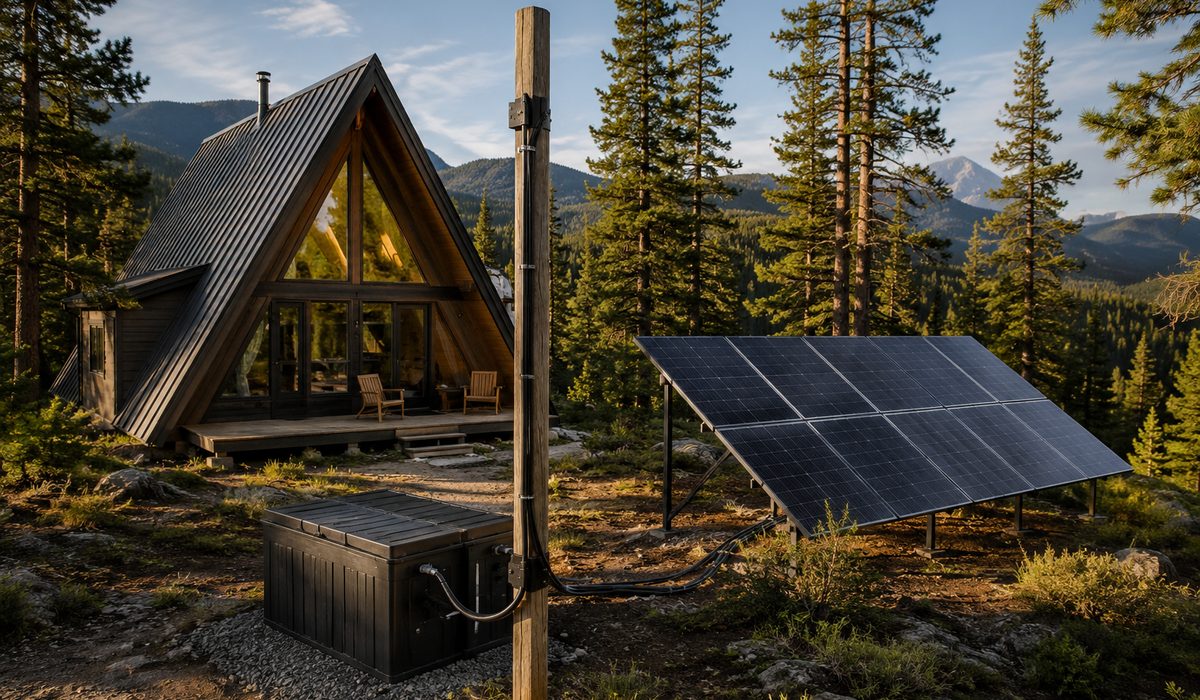
Six matched systems from budget starter kits to full ground-mount arrays.
Complete 400W system with 4×100W panels, 40A MPPT controller, mounting hardware, and wiring. Expandable to 800W.
Full off-grid system: 6×400W panels, 60A MPPT controller, 5kWh LiFePO4 battery, 3000W inverter, and all cabling.
Entry-level cabin kit with 2×270W panels, charge controller, 2000W inverter, and battery cables. Great first system.
Purpose-built RV solar kit with 4×100W panels, 30A controller, mounting brackets, MC4 connectors, and cable glands.
Heavy-duty 800W system with 2×400W panels, adjustable ground-mount frame, 40A MPPT, and 25ft cable runs.
Budget-friendly starter: 2×100W panels, 20A PWM controller, mounting Z-brackets, and 20ft tray cable.
A complete kit ships with matched panels, controller, battery, and inverter that are verified to work together at the rated capacity. Building your own from separate components gives you more flexibility and sometimes a better price per watt, but the burden of matching amperage, voltage, and capacity across every component falls on you.
Start with your daily power draw in watt-hours (add up every device's wattage × hours used per day), then size your panel wattage and battery capacity around that number plus a buffer for cloudy days. Our System Sizing Guide walks through the full calculation.
It depends entirely on load. A 400–800W kit comfortably covers lighting, device charging, and small electronics for weekend use. Running a refrigerator, well pump, or power tools full-time typically calls for a system in the 2,000W+ range with a larger LiFePO4 battery bank — like the Renogy Cabin Solution above.