Buying Guide
Best Solar Kits for Cabins
Sized by real use case — weekend getaway, part-time retreat, or full-time off-grid living — so you buy the system that actually matches your load instead of guessing.
Sized by real use case — weekend getaway, part-time retreat, or full-time off-grid living — so you buy the system that actually matches your load instead of guessing.
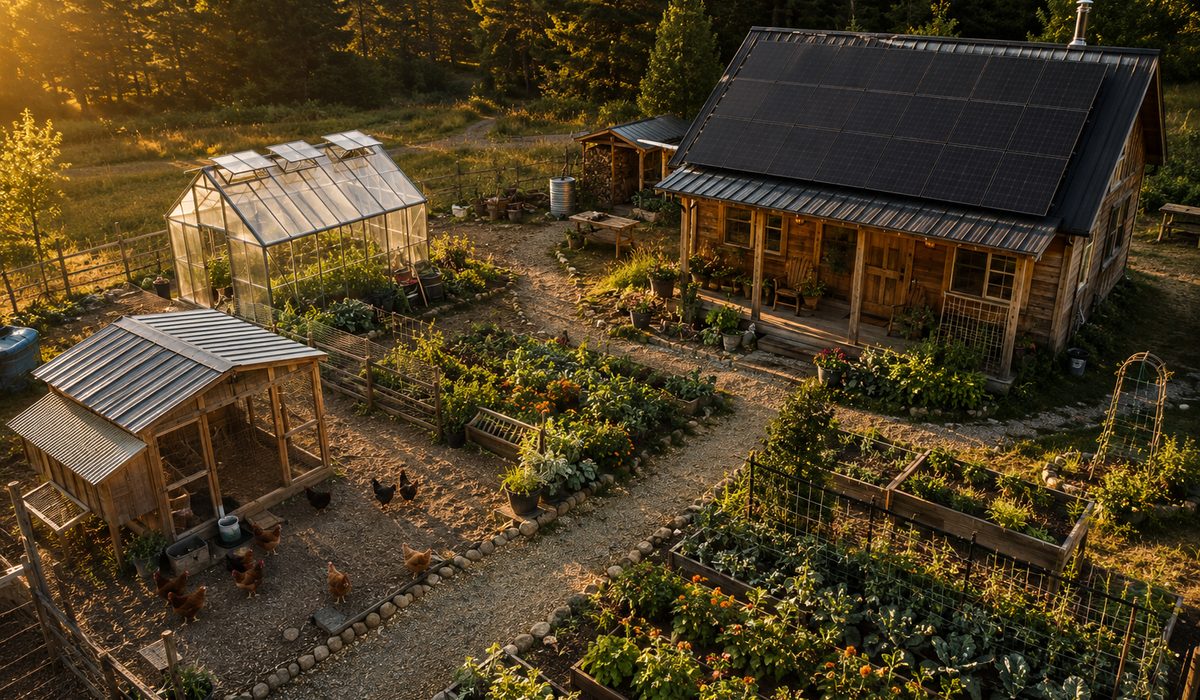
Cabins are one of the best use cases for solar — no utility hookup to trench in, no monthly bill, and a load profile that's usually modest enough for a mid-size kit to handle comfortably. But "cabin solar kit" covers an enormous range, from a 200W system that keeps a few LED lights and a phone charged, up to a full 2,500W+ off-grid system running a refrigerator, well pump, and power tools year-round.
The single biggest factor in choosing the right kit isn't panel count or brand — it's how you actually use the cabin. Below, kits are grouped into three tiers by real load profile, followed by our top pick for full-time off-grid use and a full FAQ covering the questions that come up most.
List what you actually plan to run and for how long each day: LED lighting, a phone/laptop charger, a mini fridge, a water pump, a space heater fan, power tools. Multiply each device's wattage by hours of daily use to get watt-hours — that number drives everything else. A cabin used two weekends a month has a completely different requirement than one lived in full-time.
Panels only generate power while the sun's up. Battery capacity is what determines whether you have power on a cloudy day or after dark. LiFePO4 (lithium iron phosphate) batteries last 3–4x longer than lead-acid or AGM alternatives and handle deeper discharge cycles — worth the higher upfront cost for anything beyond occasional weekend use.
MPPT controllers squeeze 20–30% more usable power out of the same panels compared to PWM, especially in cooler weather or partial shade — common at wooded cabin sites. PWM kits cost less and work fine for small, simple systems, but anything sized for real appliance use benefits from MPPT.
Cabin roofs are often shaded by tree cover, which makes ground-mount frames — angled independently for sun exposure — a common choice even when roof space is available. Ground-mount kits also make future expansion easier since you're not limited by roof area.
If the cabin needs to run a real household load year-round, this is the system built for it.
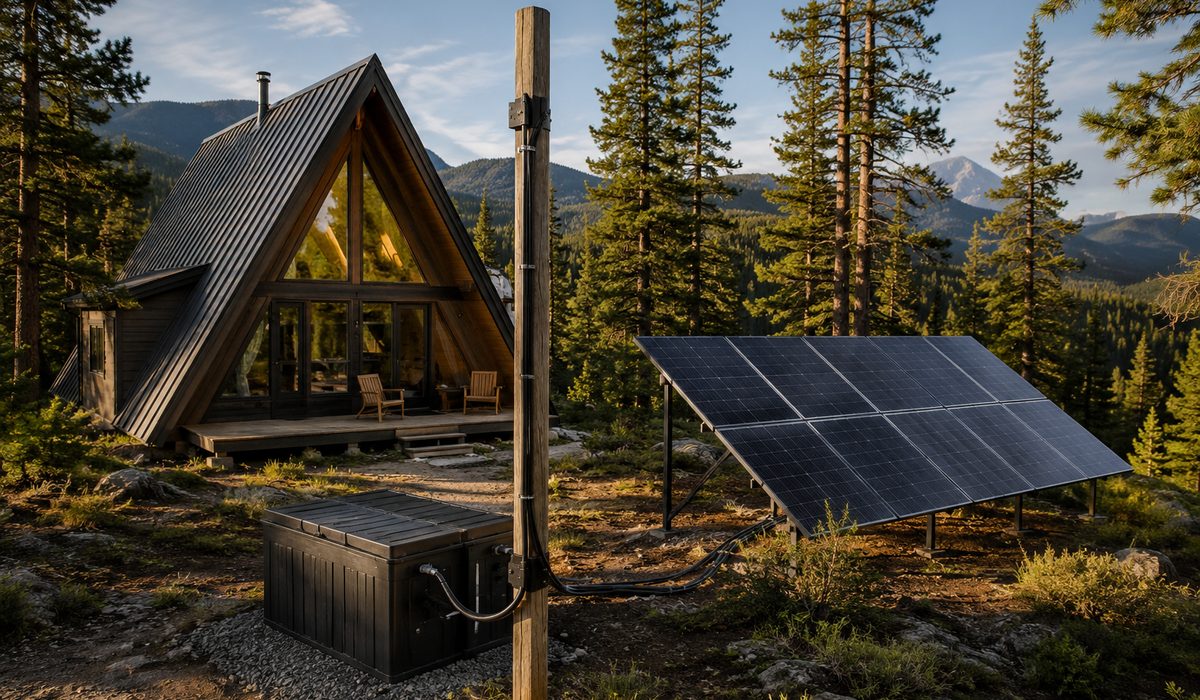
A complete, pre-matched 2,560W system with enough battery capacity to ride out multiple cloudy days — built specifically for cabins, tiny homes, and off-grid living where you need real, reliable household power.
Three tiers based on how often you're at the cabin and what you're actually running.
Lighting, phone and laptop charging, small electronics. A few weekends a month, nothing that needs to run overnight unattended.
BougeRV 200W Starter Kit →Adds a mini fridge, water pump, and longer stays. Ground-mount framing makes sense here if roof space is shaded or limited.
Rich Solar 800W Ground-Mount Kit →Full refrigerator, well pump, power tools, year-round living. Needs real battery depth for multi-day cloudy stretches.
Renogy Cabin Solution ↑| Kit | Output | Battery | Inverter | Best For |
|---|---|---|---|---|
| BougeRV 200W Starter | 200W | Not included | Not included | Basic weekend lighting |
| Renogy 400W Cabin Kit | 400W | Not included | Not included | Weekend cabin, expandable |
| Grape Solar 540W Cabin Kit | 540W | Not included | 2000W | First-time off-grid setup |
| Rich Solar 800W Ground-Mount | 800W | Not included | Not included | Shaded roofs, ground-mount |
| ECO-WORTHY 2400W Off-Grid | 2400W | 5kWh LiFePO4 | 3000W | Part-time, moderate loads |
| Renogy Cabin Solution | 2560W | 20.48kWh LiFePO4 | 3500W | Full-time off-grid living |
It depends on daily watt-hour usage, not square footage. A weekend cabin running lights and charging devices can get by on 200–400W of panels. A full-time cabin running a fridge and water pump typically needs 2,000W+ of panels paired with a large battery bank. Add up your actual appliance wattage and hours of use to get a real number rather than guessing from panel count alone.
Yes, but a fridge running continuously needs both enough panel wattage to recharge daily and enough battery capacity to carry it through the night and cloudy stretches. This typically pushes a system into the 800W+ panel and multi-kWh battery range rather than an entry-level kit.
Battery capacity should cover your daily watt-hour usage plus a buffer for 2–3 days of low sun, especially in wooded or northern locations. Occasional-use cabins can often skip a large battery entirely and run directly off panels during daylight; full-time cabins generally need double-digit kWh of LiFePO4 storage.
Most cabin solar kits, including everything on this page, are off-grid systems with battery storage — the right choice when there's no utility line nearby. If your cabin already has a grid connection, a grid-tied system without battery storage can be cheaper, but it won't provide power during an outage unless paired with battery backup.
Permit requirements vary significantly by county and state, and depend on whether the system is roof-mounted, ground-mounted, and whether it's grid-tied. Check with your local building department before installation — this isn't something a general guide can answer accurately for your specific location.
The Renogy Cabin Solution is the most complete system on this list — pre-matched panels, battery, and inverter sized for full-time cabin living.
When you buy through links on this page, we may earn an affiliate commission at no additional cost to you. This helps us keep the site running and our guides up to date. We only recommend products we genuinely believe in.